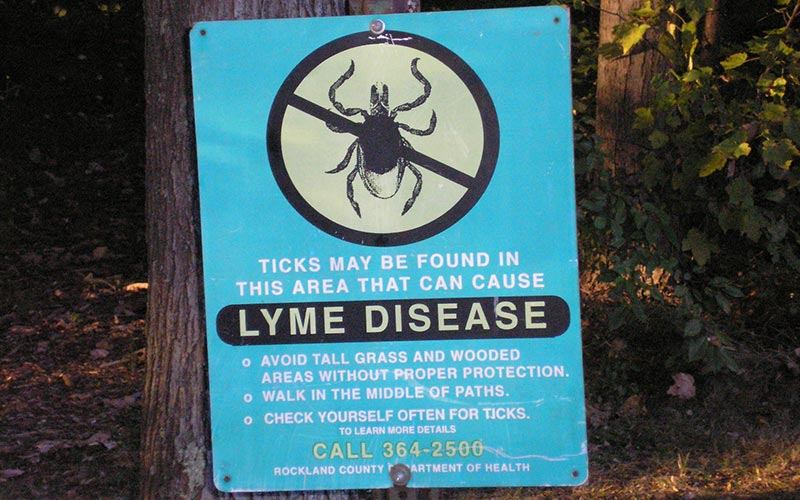
Lyme disease is the most commonly transmitted disease from ticks. Since the summer is now officially here, we love spending as much time as possible outside with our pets. During this time all the pests are out ready to prey on your dog. Ticks usually enjoy wood piles and tall grassy areas.
Lyme disease is from a bacteria called Borrelia burgdorferi group. This bacteria tends to attack your dog's joints and it will inflame the joints till it is painful for your dog to move.
Many dogs with Lyme disease tend to suffer from lameness. This is the inflammation of their joints. With Lyme disease, the lameness will happen for 2-4 days and then it will seem to get better, but in a week or so it will return to a different limb. This disease tends to affect younger dogs more, but this disease can affect the kidneys too. Here are a few more signs to know of when it comes to Lyme Disease:
Borrelia burgdorferi, which is the bacteria responsible for Lyme disease, is transmitted by slow-feeding, hard-shelled deer ticks. However, infection typically occurs after the Borrelia-carrying tick has been attached to the dog for at least 18 hours.
The first thing in diagnosing your dog with Lyme disease is that you need to get a good history of where your dog has been and if you have discovered a tick on your pet. The history will give your veterinarian a good idea of what is needed to treat your pet.
A definite tale sign of Lyme disease is the tick bite. It is important that your veterinarian needs to rule out other arthritic problems your pet may suffer instead.
When your dog is diagnosed with Lyme disease then the treatment is pretty much an outpatient setting. You pet will be treated with a series of antibiotics and it is important to complete the treatment until the prescription is complete.
Lyme disease is preventable and Pet4CPR can help you learn more about how to care for your pet and know when you should take your pet to see a vet.